
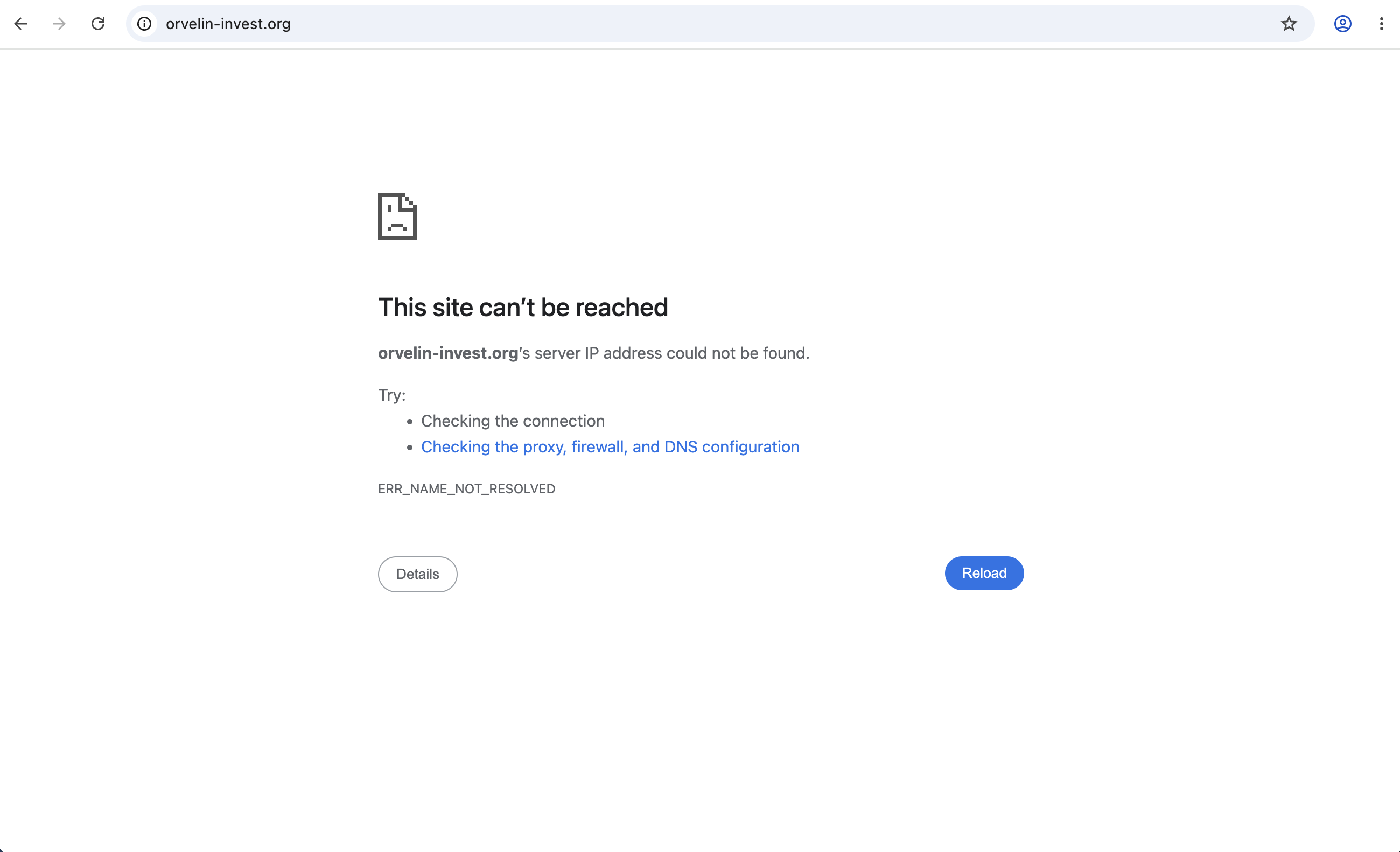

Market Trend Introduction
Over the past few years, online investment platforms have expanded rapidly alongside increased retail participation in forex, crypto trading, and contract-based financial instruments. This growth has also been accompanied by a parallel rise in high-risk and poorly regulated websites that present themselves as sophisticated investment services while operating with limited transparency. Search interest in lesser-known domains, including emerging brokerage-style platforms, often spikes during volatile market cycles when users are actively seeking alternative returns beyond traditional financial institutions.
In this environment, websites like orvelin-invest.org tend to attract attention by positioning themselves within the broader narrative of accessible trading, passive income opportunities, or high-yield investment systems. However, many such platforms share patterns that warrant careful examination, especially when regulatory clarity, corporate identity, and operational transparency are not immediately verifiable.
This review takes a structured, investigative approach to understanding how such a platform presents itself and what potential warning signals may be observed through its user-facing structure and operational behavior.
Service Overview
At a surface level, orvelin-invest.org appears to present itself as an investment or trading-related service, typically aligning with categories such as asset management, forex trading, cryptocurrency investment, or automated trading systems. These types of platforms commonly claim to provide users with simplified access to global financial markets through a web-based dashboard.
The service structure usually implies one or more of the following components:
- A user registration and account verification process
- Deposit-based investment tiers or packages
- Claimed access to trading instruments such as forex, crypto, or commodities
- Dashboard-based profit tracking or portfolio performance metrics
- Referral or bonus systems designed to incentivize new user onboarding
However, what stands out in platforms with similar profiles is the lack of verifiable institutional backing. In legitimate financial services, companies typically disclose licensing information, regulatory oversight bodies, physical office locations, and leadership teams. When such details are missing, incomplete, or difficult to independently confirm, it raises questions about the operational legitimacy of the service being offered.
Another notable aspect in similar platforms is the emphasis on projected returns rather than clearly explained investment mechanisms. While marketing language may suggest advanced trading systems or algorithmic strategies, the underlying methodology is often not transparently documented.
User Journey
The typical user journey on platforms like orvelin-invest.org tends to follow a predictable sequence designed to reduce friction during onboarding while gradually introducing financial commitment.
1. Entry and Registration
Users are often directed to a simple landing page encouraging account creation. The registration process is usually minimal, requiring basic personal information such as name, email, and sometimes phone number. This low barrier to entry is a common tactic used to maximize sign-up conversion rates.
2. Initial Engagement
After registration, users are typically introduced to a dashboard that displays investment options or account tiers. These dashboards are often visually polished, showing simulated profits or performance graphs designed to build early confidence.
3. Deposit Encouragement
The key transition point in the user journey involves encouraging the first deposit. This may be framed as a requirement to activate trading features, unlock higher returns, or access premium investment plans. In many cases, multiple deposit tiers are presented, each promising increased profitability or faster returns.
4. Perceived Growth Phase
Once funds are deposited, users may observe dashboard activity suggesting account growth. In some cases, this growth is algorithmically simulated rather than tied to real market execution. The purpose is typically to reinforce trust and encourage additional deposits.
5. Withdrawal Friction
A critical stage in evaluating such platforms is the withdrawal process. Users often report delays, additional verification requirements, or requests for further payments before withdrawals can be processed. These can include “tax fees,” “unlock charges,” or “security deposits,” which are not standard practices in regulated financial institutions.
Observations
When examining platforms like orvelin-invest.org from a structural and behavioral standpoint, several recurring observations emerge that are commonly associated with high-risk or non-transparent financial operations.
Lack of Verifiable Licensing
One of the most significant observations is the absence of clear regulatory licensing information. Legitimate brokers and investment firms are typically registered with recognized financial authorities depending on jurisdiction. Without this verification, users cannot independently confirm whether trading activities are supervised or compliant with financial regulations.
Limited Corporate Transparency
Another key observation is the scarcity of verifiable corporate data. This includes unclear company ownership, missing executive identities, or vague incorporation details. In legitimate financial ecosystems, companies are expected to disclose leadership teams and corporate governance structures.
Overemphasis on Returns
Platforms in this category often emphasize profit generation rather than risk disclosure. Marketing materials may highlight daily returns, guaranteed percentages, or low-risk investment opportunities. In real financial markets, returns are inherently variable and cannot be guaranteed.
Artificial Interface Signals
The user interface in similar systems often displays activity that mimics real trading behavior. This includes fluctuating charts, automated trade logs, and increasing balance indicators. However, without independent verification of actual market execution, these signals may not represent real transactions.
Aggressive Upselling Behavior
Another recurring pattern is the push toward higher deposit tiers. Users may be encouraged to reinvest profits or upgrade accounts to unlock higher earning potential. This creates a cycle where users are incentivized to continuously increase financial exposure.
Risk Factors
When evaluating orvelin-invest.org or similar platforms, several key risk factors should be considered carefully.
1. Regulatory Uncertainty
The absence of verifiable regulation is one of the most critical risks. Without oversight, users have limited legal protection in case of disputes, fund loss, or account restrictions.
2. Fund Accessibility Risk
If withdrawal processes are unclear or conditional on additional payments, there is a heightened risk that users may not be able to access deposited funds freely. Legitimate financial institutions do not typically require unexpected fees to process withdrawals.
3. Data Security Concerns
Platforms requiring personal identification or financial details without clear security disclosures may pose data privacy risks. Users cannot be certain how sensitive information is stored or used.
4. Misleading Performance Indicators
Simulated dashboards or non-audited performance metrics can create a false sense of profitability. This may lead users to make additional deposits based on inaccurate representations of account growth.
5. Lack of Independent Verification
A major risk indicator is the inability to independently verify trading activity, liquidity providers, or external audits. Without third-party confirmation, all displayed results remain internally controlled by the platform.
6. High-Risk Communication Patterns
Some users of similar platforms report persistent communication encouraging additional investment, often framed as time-sensitive opportunities or exclusive upgrades. This can create psychological pressure to invest beyond initial intent.
What Can You Do If You’ve Been Affected?
If you've had any interactions with orvelin-invest.org, it’s really important to take a breath and act quickly:- Stop sending any more money right away.
- Make sure to save all your records, like transactions and messages.
- Take a moment to evaluate your situation before making any more decisions.
Summary
The analysis of orvelin-invest.org within the broader context of emerging online investment platforms highlights several areas that warrant caution. While the platform may present itself with polished visuals and structured investment offerings, the absence of clear regulatory oversight, combined with limited transparency regarding operations and financial execution, places it within a high-risk category of online financial services.
The most significant concerns relate to unverifiable licensing, unclear corporate structure, and user journey patterns that prioritize deposits over financial clarity. Additionally, the presence of withdrawal friction mechanisms and performance representations that cannot be independently confirmed further increases uncertainty around the platform’s legitimacy.
In today’s rapidly evolving digital investment landscape, platforms that operate without strong regulatory alignment or transparent auditing frameworks should be approached with heightened scrutiny. Users are advised to critically evaluate any service that promises consistent returns without clearly documented risk structures or independently verifiable trading activity.
Ultimately, orvelin-invest.org exemplifies the broader challenges faced by online investors navigating a marketplace where appearance and functionality can closely mimic legitimate services, but underlying operational integrity remains difficult to confirm.