

Introduction
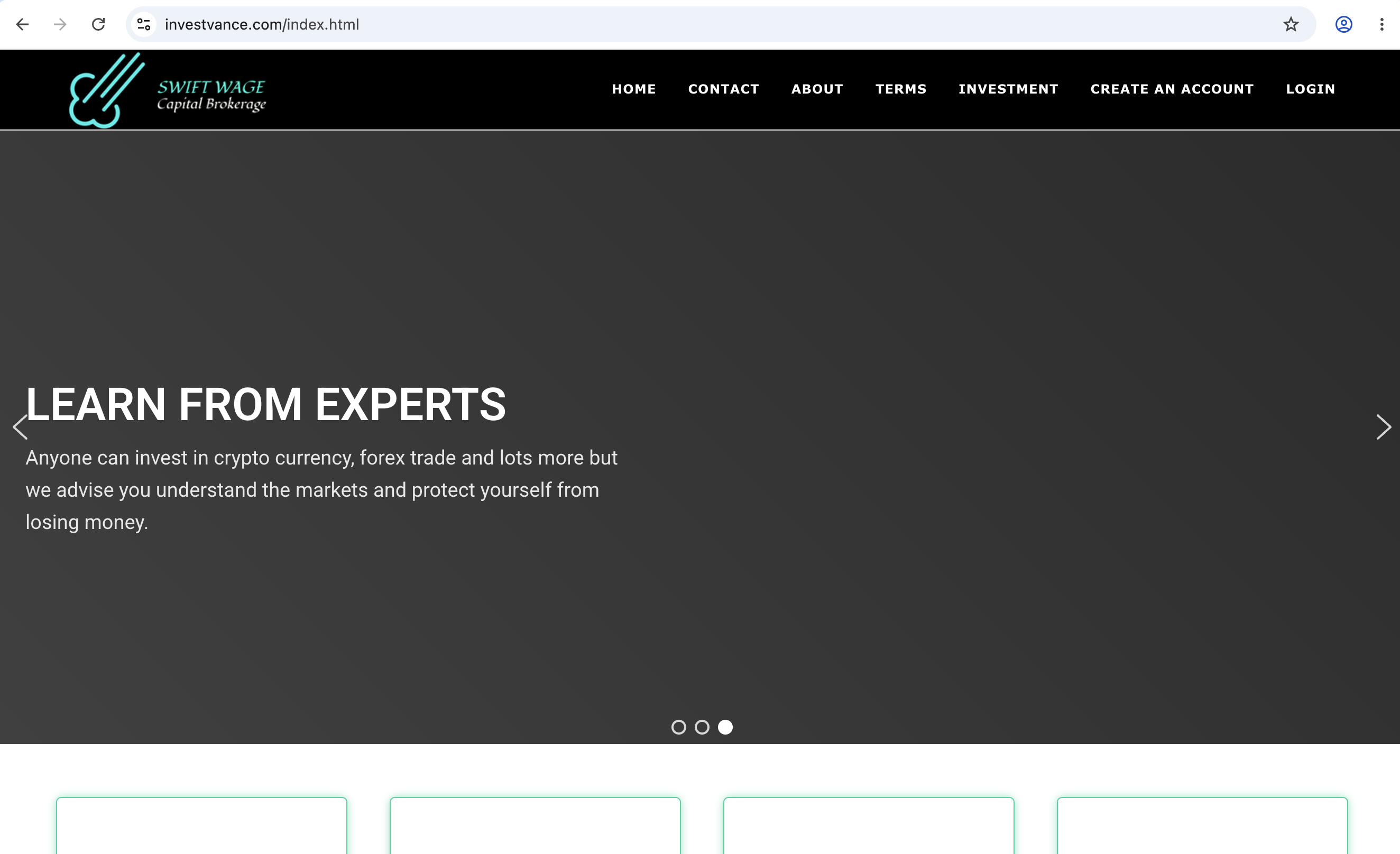
Digital trading platforms have made it easier than ever to access global markets—whether you're buying stocks, trading forex, or speculating on crypto. But not all platforms play by the rules. Some operate in legal gray areas, and that’s where Investvance.com lands. It’s a platform that’s gained some traction but remains unregistered with major financial watchdogs. So, is it worth your time, or is it a risk you shouldn’t take? In this breakdown, I’ll walk you through Investvance’s structure, how it handles user experience, and the biggest red flags you need to consider before depositing a single dollar.1. What’s Under the Hood? A Look at Investvance’s Structure
1.1 What Can You Actually Trade?
Investvance markets itself as a multi-asset trading platform, meaning you can dabble in:- Forex (major, minor, and exotic currency pairs)
- CFDs (Contracts for Difference) on stocks, indices, and commodities
- Cryptocurrencies (though availability depends on your location)
- Leveraged trading (with margin requirements that vary by asset)
- A demo account for practice
- Multiple account tiers (Standard, VIP, etc.)
- Web and mobile trading apps (iOS and Android)
1.2 The Biggest Problem: No Regulation
Here’s the dealbreaker: Investvance isn’t registered with any major financial authority. That means it’s not overseen by:- The U.S. SEC
- The UK’s FCA
- Australia’s ASIC
- Cyprus’s CySEC
- Segregated client funds (ensuring your money isn’t mixed with the company’s)
- Anti-money laundering (AML) compliance
- A clear dispute resolution process
1.3 The Mystery of Ownership and Transparency
Ever tried to find out who’s really behind a trading platform? With Investvance, good luck. The website gives almost no details about:- Who owns the company
- Where it’s headquartered
- Its financial reserves
2. How Does It Feel to Trade on Investvance?
2.1 The Trading Platform: Functional but Basic
Investvance appears to use its own proprietary platform (or a white-label version from a third party). Here’s what stands out:- Web and mobile apps (available on iOS and Android)
- Basic charting tools (nothing as advanced as MetaTrader 4/5 or cTrader)
- Standard risk management features (stop-loss, take-profit orders)
- Some educational content (webinars, guides, market analysis)
2.2 Signing Up: Easy, But Is It Too Easy?
Opening an account is straightforward:- Enter basic details (name, email, phone)
- Verify your identity (upload ID and proof of address)
- Fund your account (bank transfer, card, or e-wallet)
2.3 Deposits, Withdrawals, and Hidden Costs
Investvance supports:- Bank transfers
- Credit/debit cards (Visa, Mastercard)
- E-wallets (Skrill, Neteller, etc.)
- Inactivity fees (if you don’t trade for a while)
- Spread markups (the difference between buy and sell prices)
- Withdrawal fees (some brokers sneak these in)
3. The Biggest Risks You Need to Know About
3.1 Regulatory Risks: Playing with Fire
The lack of regulation isn’t just a minor issue—it’s a major red flag. Trading with an unregistered broker means:- Your funds aren’t protected (no compensation schemes if the company fails)
- No guarantee your money is safe (companies can misuse client funds)
- No legal recourse if disputes arise
3.2 Customer Support: A Mixed Bag
User feedback on customer service is hit or miss:- Slow responses (especially for withdrawal requests)
- Unclear fee structures (hidden charges popping up later)
- Difficulty reaching support (live chat, email, and phone support vary in reliability)
3.3 Trading Conditions: Not the Smoothest Ride
Some users report:- Slippage (orders filled at worse prices during volatility)
- Re-quotes (delays in execution leading to price changes)
- Limited asset selection (compared to regulated brokers)
4. How Does Investvance Stack Up Against Regulated Brokers?
Let’s compare it to properly licensed alternatives like:- IG Group (FCA-regulated)
- Interactive Brokers (SEC-regulated)
- Plus500 (ASIC-regulated)
| Feature | Investvance | Regulated Brokers |
|---|---|---|
| Regulatory Status | Unregistered | Fully licensed |
| Client Fund Protection | None | Yes (up to €20K in EU, $500K in US) |
| Fee Transparency | Limited | Fully disclosed |
| Customer Support | Inconsistent | Reliable & responsive |
| Trading Conditions | Potential slippage | Tighter spreads, better execution |
5. Who Should (and Shouldn’t) Use Investvance?
✅ Who Might Find It Useful:
- Beginners who want a simple, no-frills platform
- Traders in regions where unregistered brokers are tolerated (some offshore areas)
- Risk-takers willing to gamble on higher potential rewards (and losses)
❌ Who Should Stay Away:
- Experienced traders who need advanced tools
- Investors in strict regulatory zones (US, EU, UK, Australia)
- Anyone who values fund safety and transparency
6. The Bottom Line: Is Investvance Legit or a Scam?
Investvance.com isn’t an outright scam, but it’s high-risk. Some users have had decent experiences, but the platform’s lack of regulation, opaque fee structure, and inconsistent support make it a questionable choice.Pros:
✔ Simple, user-friendly interface ✔ Multiple asset classes available ✔ Demo account for practiceCons:
✖ Unregistered with major financial authorities ✖ Limited transparency on fees and ownership ✖ Potential withdrawal delays and poor customer support ✖ No investor protection schemesMy Advice:
- If you still want to try it, start with a small deposit and test withdrawals before committing more.
- For most traders, a regulated broker is the smarter move—even if fees are slightly higher.
- Always do your homework before depositing funds. Consider eToro, XTB, or Saxo Bank for a safer experience.
What Can You Do If You’ve Been Affected?
If you've had any interactions with Investvance, it’s really important to take a breath and act quickly:- Stop sending any more money right away.
- Make sure to save all your records, like transactions and messages.
- Take a moment to evaluate your situation before making any more decisions.