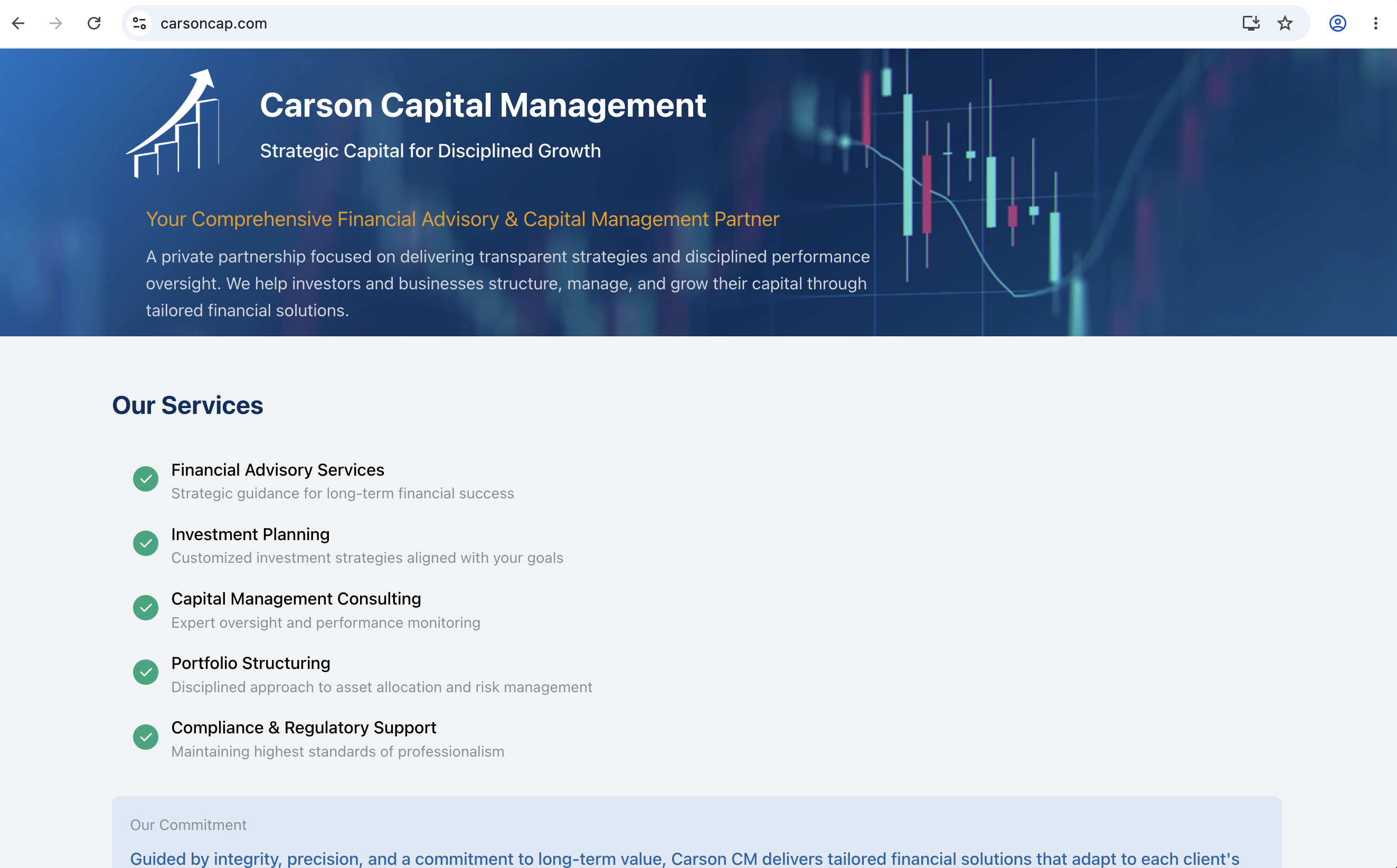
Introduction Digital finance moves fast, and with it comes a growing number of investment platforms that operate outside traditional regulatory frameworks. Among them, CarsonCap.com has drawn attention—not just for its promises of automated wealth-building, but for its lack of formal registration with key financial authorities like the SEC or FINRA.
This article takes a hard look at CarsonCap.com ,breaking down how it works, where it falls short, and what risks it poses to investors. Whether you're considering it as a potential opportunity or just trying to understand the space better, the goal is to give you the facts without sugarcoating the realities.
What Exactly Is CarsonCap.com? At first glance, CarsonCap.com positions itself as a modern investment platform where users can trade cryptocurrencies, stocks, and other digital assets. The site highlights ease of use, automated trading tools, and managed portfolios as its main selling points.
But here’s the catch: unlike well-known brokerages, CarsonCap.com doesn’t appear to be registered with major financial regulators in the U.S. or elsewhere. That single detail raises immediate questions about its legitimacy, transparency, and whether it even has the right to operate as an investment service.
How Does CarsonCap.com Actually Work? 1. How It Makes Money (And How You Might Lose It) Unregistered platforms like CarsonCap.com typically profit in ways that aren’t always clear upfront. Here’s what you should watch for:
Trading Fees: Every time you buy or sell, the platform takes a cut—either as a flat commission or through hidden spreads (the difference between the buy and sell price). Management Fees: If you opt for a managed portfolio, the platform may take a percentage of your total investment (often 1-2% per year) regardless of performance. Spreads and Markups: Some platforms inflate prices slightly on trades, padding their profits without making it obvious. Referral Bonuses: If you bring in friends or family, you might earn a kickback—another way the platform grows its user base.
The problem? These fees aren’t always spelled out clearly. Many users only realize how much they’re paying after they’ve already deposited money.
2. The Allure—and Risks—of Automated Trading CarsonCap.com, like many of its peers, pushes automated trading systems that supposedly use AI or machine learning to generate profits. In practice, this usually means:
Pre-built Trading Bots: You pick a strategy based on your risk tolerance, and the bot executes trades automatically. Backtested "Performance" Data: The platform might show you impressive historical returns, but these numbers are often cherry-picked or outright fabricated. Real-Time Market Scraping: Some systems claim to analyze trends and act faster than a human could—though in reality, they’re just following pre-programmed rules.
The catch? If the algorithms are poorly designed or the market behaves unpredictably, your automated strategy could lose money just as quickly as it’s supposed to make it.
3. Signing Up: What to Expect The onboarding process is usually straightforward:
You Register: Provide your name, email, and phone number. They Verify (Sometimes): Some platforms ask for ID checks (KYC), but many unregistered ones skip this step. You Fund Your Account: Deposits can be made via bank transfer, credit card, or even cryptocurrency. You Choose a Strategy: Pick from pre-made portfolios or customize your own.
Once your account is live, you can track performance, tweak settings, or try to withdraw funds. But here’s where things get tricky—some users report delays, unexplained restrictions, or outright refusals when they try to pull their money out.
The Hard Truth: What’s Really Going on With CarsonCap.com? 1. The Regulatory Red Flag No One Can Ignore The biggest issue with CarsonCap.com is its lack of registration . In the U.S., any platform offering investment services or advice is supposed to register with the SEC or qualify for an exemption. A quick check of the SEC’s database and FINRA’s records shows no trace of CarsonCap.com .
What does that mean for you?
No Legal Oversight: Without registration, the platform isn’t subject to audits, compliance checks, or the same consumer protections as registered brokers. Higher Fraud Risk: Unregistered platforms have a history of disappearing overnight, freezing withdrawals, or outright stealing funds. No Recourse: If something goes wrong, you won’t have the same legal avenues to recover losses as you would with a regulated firm.
2. The Transparency Problem Most unregistered platforms keep key details vague. With CarsonCap.com, you’ll likely struggle to find:
Who’s Really in Charge: The names of founders, executives, and decision-makers are often hidden behind shell companies or offshore entities. How Much You’re Actually Paying: Fee structures are buried in fine print, and "management fees" can eat into returns faster than you realize. Real Performance Data: If the platform claims 20% annual returns, ask for verifiable proof. Many unregistered services fabricate or exaggerate results.
Without clear disclosures, you’re investing blind.
3. What Are Users Saying? Opinions on CarsonCap.com are all over the map:
Some Love It: A handful of users praise its intuitive interface, automated features, and responsive support. Others Hate It: A far larger group reports frozen accounts, missing funds, or strategies that lose money faster than they make it. No Middle Ground: The lack of regulation means there’s no formal dispute resolution—if your money vanishes, you’re on your own.
Forums like Reddit and review sites are filled with warnings about unregistered platforms, and CarsonCap.com is no exception.
4. Security: A Major Concern Unregistered platforms often cut corners on security. Before you deposit a dime, ask:
Is Your Data Encrypted? Check for HTTPS in the URL and two-factor authentication (2FA) options. How Are Funds Stored? Some platforms mix client money with their own, creating a risk if they run into financial trouble. Could It Be a Phishing Scam? Fraudsters often mimic legitimate platforms to steal login details. Always double-check the website’s URL.
Is CarsonCap.com a Scam? The short answer? It’s impossible to say for sure without more transparency. But here’s how to decide for yourself:
🚩 Red Flags (Walk Away)
No SEC, FINRA, or other major regulatory registration. Owners or team members are impossible to verify. Promises of "guaranteed" or "risk-free" returns. Poor customer support or no way to reach them. A flood of negative reviews about withdrawal issues.
🟢 Green Flags (Proceed with Extreme Caution)
Clear, upfront fee structures. Verifiable user testimonials with real details. Detailed terms of service and risk disclosures. Secure website with encryption and 2FA.
If even half of the red flags apply, this isn’t a platform you should trust with your money.
Safer Alternatives to Consider If you’re looking for legitimate ways to invest, regulated options are the way to go. Some reputable alternatives include:
Traditional Brokerages: Fidelity, Charles Schwab, or E*TRADE (all SEC-registered). Crypto Exchanges: Coinbase, Kraken, or Binance.US (regulated in most jurisdictions). Robo-Advisors: Betterment or Wealthfront (SEC-registered investment advisors).
These platforms offer transparency, investor protections, and legal recourse if something goes wrong.
A Due Diligence Checklist Before You Invest If you’re still considering CarsonCap.com—or any unregistered platform—run through this checklist first:
✅ Verify Registration: Check the SEC’s IAPD database and FINRA’s BrokerCheck to confirm legitimacy. ✅ Dig Into Reviews: Look for patterns in complaints on Trustpilot, Reddit, or Trustpilot. ✅ Read the Fine Print: Understand fee structures, withdrawal policies, and what happens if the platform fails. ✅ Test Support: Email or call them with questions before depositing money. Slow or nonexistent responses are a bad sign. ✅ Start Small: If you proceed, deposit only what you can afford to lose. ✅ Use Traceable Payments: Avoid platforms that only accept wire transfers or untraceable crypto payments.
What Can You Do If You’ve Been Affected? If you've had any interactions with CarsonCap.com, it’s really important to take a breath and act quickly:
Stop sending any more money right away. Make sure to save all your records, like transactions and messages. Take a moment to evaluate your situation before making any more decisions.
Getting your funds back in these cases can be tough and is usually a step-by-step process.
We’re here to offer some guidance to help you understand your options and what you might want to consider next.
👉 Head over to our Contact Us page to learn more and get the support you need.
Final Verdict: Should You Use CarsonCap.com? CarsonCap.com, like many unregistered platforms, is a high-risk gamble . It offers flashy features and the promise of easy profits—but at what cost?
For experienced investors who’ve done their homework and understand the risks, it might serve as a supplementary tool. But for the average user, especially those new to investing, the potential downsides—fraud, hidden fees, no legal protections—far outweigh the benefits.
Bottom Line:
Avoid it entirely if it’s unregistered, has poor reviews, or makes unrealistic promises. Proceed with extreme caution only if you’ve verified its legitimacy and accept the risks. Stick to regulated platforms for safer, more transparent investing.
At the end of the day, the allure of high returns is rarely worth the gamble when your money isn’t protected. If something sounds too good to be true, it probably is.
Disclaimer This article is for informational purposes only and does not constitute financial, legal, or investment advice. Investing always carries risk, and you should do your own research or consult a professional before making any decisions. The author and publisher are not liable for any losses incurred from using unregistered investment platforms.