

Introduction
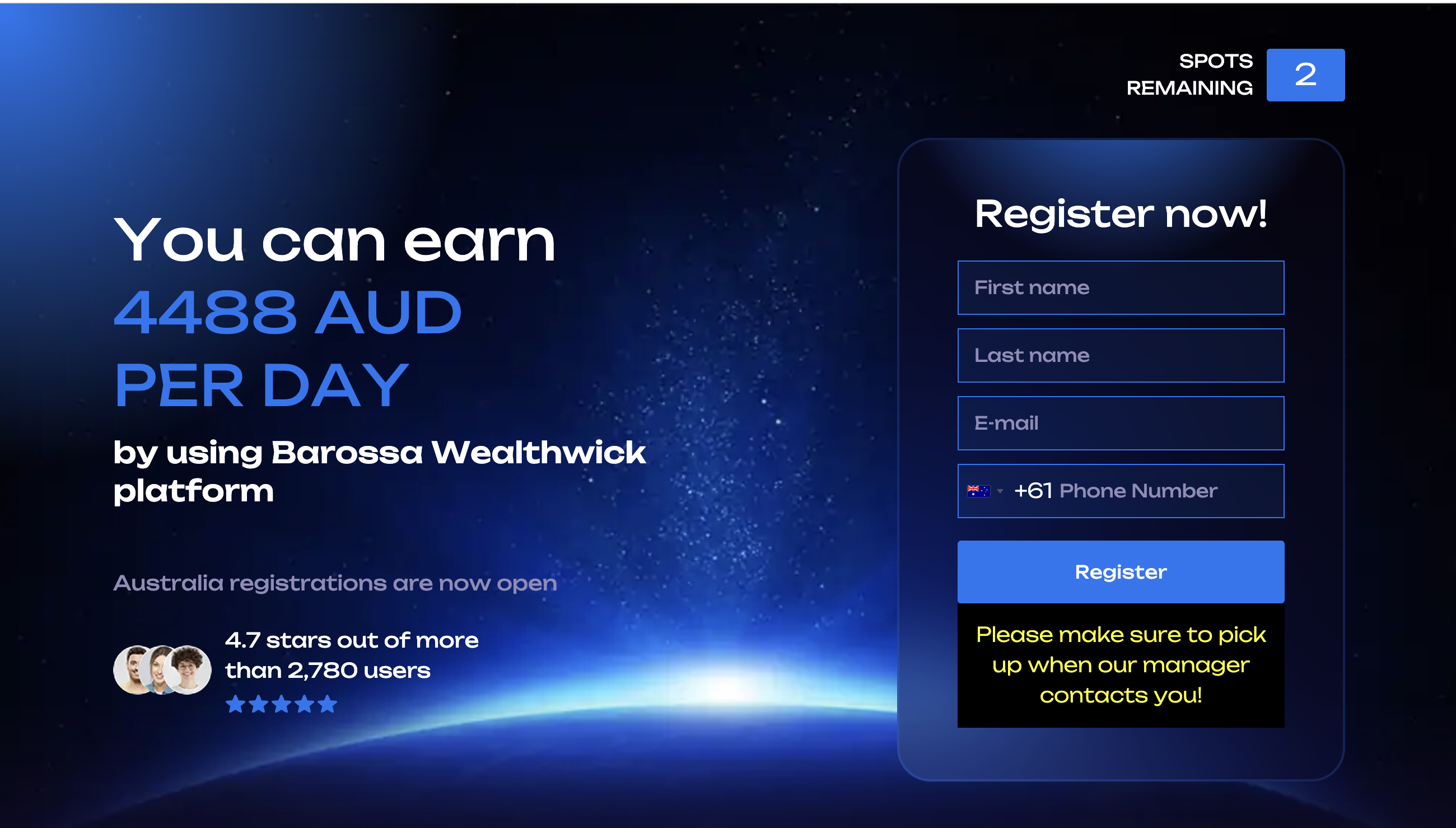
In the ever-expanding world of online investment opportunities, new platforms emerge daily, promising lucrative returns with minimal risk. However, not all of these platforms operate with transparency or legitimacy. Barossa Wealthwick is one such platform that has raised concerns among investors and financial analysts alike. While it presents itself as a sophisticated wealth management firm, several red flags suggest it may be operating under questionable practices. This article provides an objective analysis of Barossa Wealthwick, examining its operational structure, key observations, and the risks it poses to potential investors. By understanding how such platforms function, individuals can make more informed decisions and avoid falling victim to financial scams.What Is Barossa Wealthwick?
Barossa Wealthwick positions itself as a global investment firm specializing in asset management, cryptocurrency trading, and high-yield investment programs (HYIPs). The platform claims to leverage advanced algorithms, proprietary trading strategies, and a team of financial experts to generate substantial returns for its clients.Key Features Promoted by Barossa Wealthwick
- High Returns: The platform advertises guaranteed profits with minimal risk, often citing past performance as proof of its success.
- Diverse Investment Options: Investors can choose from various plans, including forex trading, cryptocurrency investments, and automated trading bots.
- User-Friendly Interface: The website and dashboard are designed to appear professional, with real-time tracking of investments.
- Affiliate Programs: Barossa Wealthwick encourages users to refer others, offering commissions for bringing in new investors.
How Barossa Wealthwick Operates: A Closer Look
1. The Business Model: A Pyramid Scheme or Legitimate Investment?
One of the most critical aspects of evaluating Barossa Wealthwick is its revenue model. Many platforms that promise unusually high returns rely on Ponzi-like structures, where new investors' funds are used to pay earlier investors rather than generating real profits from legitimate investments.Possible Red Flags in Its Model:
- Unsustainable Return Promises: If a platform guarantees 10%+ monthly returns with no risk, it is likely unsustainable. Legitimate investments carry inherent risks, and no firm can guarantee profits.
- Lack of Transparency: Barossa Wealthwick does not provide verifiable proof of its trading strategies, fund management, or audited financial statements.
- Referral-Driven Growth: The emphasis on affiliate programs suggests that recruitment of new investors may be a primary revenue source rather than actual trading profits.
2. The Website and User Experience
A professional-looking website is often the first impression investors get. Barossa Wealthwick’s site includes:- A sleek, modern design with testimonials (which may be fabricated).
- A dashboard displaying "live trading results" (potentially manipulated or fake).
- A registration process requiring personal and financial details, raising privacy concerns.
- No verifiable company registration (e.g., lack of a business license or regulatory compliance).
- Generic or stolen content (e.g., stock images, copied legal disclaimers).
- No clear contact information beyond a generic email or contact form.
3. Payment and Withdrawal Issues
A common tactic in fraudulent investment schemes is delaying or blocking withdrawals to create the illusion of profitability while preventing investors from cashing out.Potential Withdrawal Problems:
- Minimum withdrawal thresholds that are difficult to meet.
- Excessive verification requirements (e.g., proof of identity, source of funds).
- Sudden account freezes under the guise of "security measures."
Key Observations About Barossa Wealthwick
1. Lack of Regulatory Oversight
Legitimate investment firms are typically registered with financial authorities (e.g., SEC, FCA, ASIC). Barossa Wealthwick does not appear to be regulated by any recognized financial body, which is a major warning sign.2. Overemphasis on Recruitment Over Trading
The platform’s affiliate program suggests that referral commissions may be a primary income source rather than actual trading profits. This is a hallmark of pyramid schemes, where early participants benefit at the expense of later ones.3. Inconsistent or Fake Testimonials
Many investment scams use fabricated success stories to lure new investors. Barossa Wealthwick’s testimonials may lack verifiable details (e.g., no real names, no independent verification).4. Pressure Tactics and Urgency
Scam platforms often use high-pressure sales tactics, such as:- "Limited-time offers" to rush investments.
- "Exclusive opportunities" reserved for a select few.
- Fear of missing out (FOMO) on guaranteed profits.
5. No Independent Audits or Financial Reports
Legitimate investment firms provide third-party audits or transparent financial reports. Barossa Wealthwick does not offer any verifiable financial documentation.Important Considerations for Potential Investors
1. The Risk of Total Loss
Investing in unregulated platforms like Barossa Wealthwick carries a high risk of losing all funds. Unlike regulated brokers, these firms are not bound by financial safeguards, meaning there is no recourse if the platform collapses or disappears.2. The Illusion of Profitability
Even if early investors receive payouts, these may come from new deposits rather than actual trading profits. Once recruitment slows, the scheme often collapses, leaving late investors with losses.3. Legal and Tax Implications
Engaging with unregulated investment schemes can have legal consequences, including:- Tax evasion risks (if profits are not reported).
- Potential fraud charges if the platform is later deemed illegal.
- Difficulty recovering funds if the platform shuts down.
4. Alternative, Safer Investment Options
For those seeking legitimate investment opportunities, consider:- Regulated brokerages (e.g., Interactive Brokers, TD Ameritrade).
- Index funds or ETFs (low-risk, diversified investments).
- Peer-to-peer lending platforms with proper licensing.
What Can You Do If You’ve Been Affected?
If you've had any interactions with Barossa Wealthwick, it’s really important to take a breath and act quickly:- Stop sending any more money right away.
- Make sure to save all your records, like transactions and messages.
- Take a moment to evaluate your situation before making any more decisions.
Conclusion: Should You Trust Barossa Wealthwick?
Based on the available evidence, Barossa Wealthwick exhibits multiple characteristics of a high-risk, potentially fraudulent investment scheme. While it presents itself as a sophisticated wealth management firm, the lack of regulation, unsustainable return promises, and emphasis on recruitment over trading are strong indicators of a scam.Final Recommendations:
✅ Avoid investing in unregulated platforms with unrealistic return guarantees. ✅ Research thoroughly—check for regulatory compliance, independent reviews, and verifiable track records. ✅ Consult a financial advisor before committing funds to any investment opportunity. ✅ Report suspicious platforms to financial authorities if you suspect fraudulent activity. By staying informed and exercising caution, investors can protect themselves from financial scams and make decisions aligned with their long-term financial security.Disclaimer: This article is for informational purposes only and does not constitute financial advice. Always conduct your own research before making investment decisions.