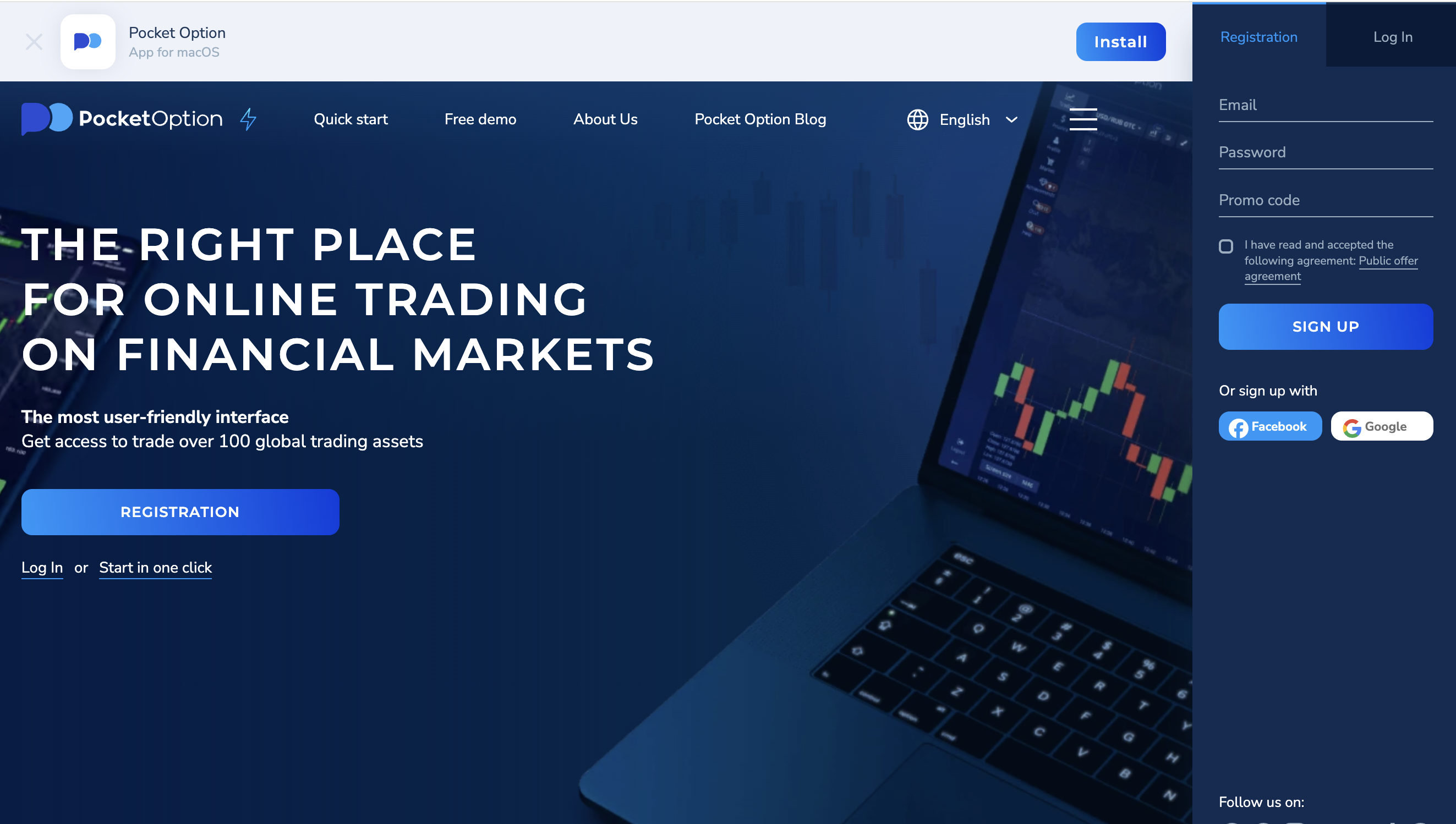
Introduction Binary options trading has gained significant popularity over the past decade, offering a simplified way for individuals to speculate on financial markets. Among the numerous platforms that have emerged, PocketOption stands out as one of the most widely promoted, particularly in regions with less stringent financial regulations. While the platform presents itself as a user-friendly and accessible trading solution, concerns about its legitimacy, transparency, and operational practices have raised red flags among traders and financial experts.
This article provides an objective analysis of PocketOption, examining its business model, regulatory status, trading mechanics, and user experiences. By dissecting its operations, we aim to help potential traders make informed decisions while highlighting key considerations before engaging with the platform.
1. Overview of PocketOption 1.1 What Is PocketOption? PocketOption is an online binary options trading platform that allows users to speculate on the price movements of various assets, including currencies, stocks, commodities, and cryptocurrencies. The platform operates on a fixed-odds betting model , where traders predict whether an asset’s price will rise or fall within a predetermined time frame (ranging from 60 seconds to months).
1.2 Key Features
User-Friendly Interface: Designed for beginners, with a simple registration process and intuitive trading dashboard. Demo Account: Offers a practice account with virtual funds to help new traders familiarize themselves with the platform. Multiple Payment Methods: Supports deposits and withdrawals via credit/debit cards, e-wallets (Skrill, Neteller), and cryptocurrencies. Bonuses & Promotions: Provides deposit bonuses, cashback offers, and referral programs to incentivize trading activity. Mobile Trading: Available as a mobile app (iOS and Android) for trading on the go.
1.3 Target Audience PocketOption markets itself as an accessible platform for retail traders , particularly those in emerging markets where traditional forex or stock trading may be restricted. Its aggressive marketing—often through social media influencers and affiliate networks—has contributed to its widespread recognition.
2. How PocketOption Operates 2.1 The Binary Options Model Binary options trading is fundamentally a high-risk, high-reward proposition. Traders place bets on whether an asset’s price will be above (Call) or below (Put) a specified strike price at expiration. If correct, they earn a fixed payout (typically 70-90%); if wrong, they lose the entire investment.
Example:
A trader predicts that Bitcoin will rise above $50,000 in the next 5 minutes. If Bitcoin is at $50,000 at expiration, the trader wins. If Bitcoin is below $50,000, the trader loses the investment.
2.2 Asset Selection & Expiry Times PocketOption offers a broad range of tradable assets, including:
Forex Pairs (EUR/USD, GBP/JPY, etc.) Stock Indices (S&P 500, NASDAQ, etc.) Commodities (Gold, Oil, etc.) Cryptocurrencies (Bitcoin, Ethereum, etc.)
Expiry times vary from 60 seconds (turbo options) to long-term contracts (days or weeks) , catering to both short-term speculators and longer-term traders.
2.3 Payout Structure & Fees
Payouts: Typically range from 70% to 90% for winning trades, though some assets may offer higher returns. Refunds: Some trades may offer partial refunds (e.g., 15%) if the asset price lands exactly on the strike price. Fees: PocketOption claims to have no deposit or withdrawal fees , but spreads (the difference between buy and sell prices) can impact profitability.
2.4 Trading Platform & Tools
Web-Based Platform: Accessible via browser, with basic charting tools and technical indicators. Mobile App: Provides a streamlined trading experience with real-time price updates. Risk Management Tools: Includes stop-loss and take-profit options, though these are not always effective in highly volatile markets.
3. Regulatory & Legal Concerns 3.1 Lack of Transparent Regulation One of the most significant concerns about PocketOption is its regulatory status . Unlike established brokers regulated by authorities such as:
CySEC (Cyprus) FCA (UK) ASIC (Australia) CFTC (US)
PocketOption is not regulated by any major financial authority . Instead, it operates under:
The Vanuatu Financial Services Commission (VFSC) – A regulator known for its lenient oversight of offshore financial firms. No EU or US Licensing – This means PocketOption is not subject to strict financial disclosure or client protection laws.
3.2 Why Does Regulation Matter? Regulated brokers must adhere to:
Segregation of client funds (ensuring traders’ money is not mixed with company funds). Fair trading practices (no manipulation of prices or refusal of withdrawals). Dispute resolution mechanisms (independent arbitration for complaints).
Since PocketOption lacks such oversight, traders have no legal recourse if the platform engages in unethical practices.
3.3 Red Flags in PocketOption’s Operations Several indicators suggest that PocketOption may not operate with full transparency:
Frequent Bonus Terms: Bonuses often come with high wagering requirements (e.g., 30x the bonus amount before withdrawal), making it difficult to cash out profits. Withdrawal Delays: Some users report unreasonable delays (weeks or months) in processing withdrawals, often citing "verification issues" as a reason. Aggressive Marketing: The platform heavily relies on affiliate marketers and influencers , who may not disclose potential conflicts of interest. No Independent Audits: Unlike regulated brokers, PocketOption does not provide third-party audits of its financial stability or trading conditions.
4. User Experiences & Common Complaints 4.1 Positive Feedback Some traders report positive experiences , particularly:
Ease of Use: The platform is beginner-friendly, with a straightforward deposit and withdrawal process. High Payouts: Successful traders highlight quick payouts (when they occur). Demo Account Utility: The practice account helps new traders learn without financial risk.
4.2 Negative Feedback & Red Flags However, a significant number of users have raised concerns, including:
Withdrawal Issues: Many traders claim their withdrawal requests were ignored or rejected without clear explanations. Platform Glitches: Some report unexplained losses due to sudden price spikes or order execution errors. Customer Support Problems: Responses from support teams are often slow or unhelpful , with some users receiving no resolution. Bonus Abuse: Traders who accept bonuses find it nearly impossible to meet withdrawal conditions , effectively forfeiting their funds.
4.3 Case Studies of Alleged Scams While individual experiences vary, several recurring patterns suggest potential malpractice:
Traders depositing $1,000 but only withdrawing $200 after multiple failed attempts. Accounts being suspended for "suspicious activity" without prior notice. Profits disappearing due to "system errors" during high-volatility periods.
5. Key Considerations Before Trading on PocketOption 5.1 Financial Risk Assessment Binary options trading is extremely risky , with most retail traders losing money. PocketOption’s lack of regulation exacerbates this risk, as there is no safety net if the platform acts against traders' interests.
5.2 Alternative Platforms For those interested in binary options, regulated alternatives include:
Binary.com (Malta-licensed) Pepperstone (ASIC-regulated, though primarily for forex) IQ Option (CySEC-regulated, though with past controversies)
These platforms, while not without risks, offer greater transparency and legal protections .
5.3 Red Flags to Watch For Before depositing funds, consider:
✅ Regulatory Status – Is the broker licensed by a reputable authority?
✅ Withdrawal Policies – Are there unreasonable delays or hidden conditions?
✅ Bonus Terms – Are wagering requirements fair and achievable?
✅ User Reviews – Are there consistent complaints about withdrawals or platform issues?
✅ Customer Support – Is the support team responsive and transparent?
5.4 Safer Alternatives to Binary Options If binary options seem too risky, consider:
Forex Trading (with a regulated broker) Stock & ETF Investing (long-term, lower risk) Cryptocurrency Trading (on reputable exchanges like Coinbase or Kraken)
6. What Can You Do If You’ve Been Affected? If you've had any interactions with uonio.com , it’s really important to take a breath and act quickly:
Stop sending any more money right away. Make sure to save all your records, like transactions and messages. Take a moment to evaluate your situation before making any more decisions.
Getting your funds back in these cases can be tough and is usually a step-by-step process.
We’re here to offer some guidance to help you understand your options and what you might want to consider next.
👉 Head over to our Contact Us page to learn more and get the support you need.
7. Conclusion: Should You Trade on PocketOption? PocketOption presents itself as an accessible and profitable trading platform, but its lack of regulation, frequent withdrawal issues, and aggressive marketing tactics raise serious concerns. While some traders may have positive experiences, the high risk of financial loss —compounded by the platform’s opaque operations—makes it a questionable choice for serious investors.
Final Recommendations: ✔ Avoid PocketOption if you prioritize safety and regulation. ✔ If you still choose to trade, use only risk capital you can afford to lose. ✔ Research alternative platforms with better regulatory oversight. ✔ Be cautious of bonuses and promotional offers that may trap funds. ✔ Withdraw profits regularly to minimize exposure to platform risks. Binary options trading is not a get-rich-quick scheme , and platforms like PocketOption often exploit inexperienced traders. Due diligence is essential —always prioritize regulated, transparent brokers over unproven offshore entities.
Final Thoughts The allure of quick profits in binary options is strong, but the reality is that most traders lose money . PocketOption’s business model—combined with its regulatory loopholes—creates an environment where traders are at a significant disadvantage . If you are considering binary options, proceed with extreme caution and explore safer, more transparent alternatives.
Disclaimer :Trading binary options involves significant risk and may not be suitable for all investors. PocketOption is not regulated by major financial authorities, and users should exercise caution. This article is for informational purposes only and does not constitute financial advice. Always conduct thorough research before engaging in trading activities.