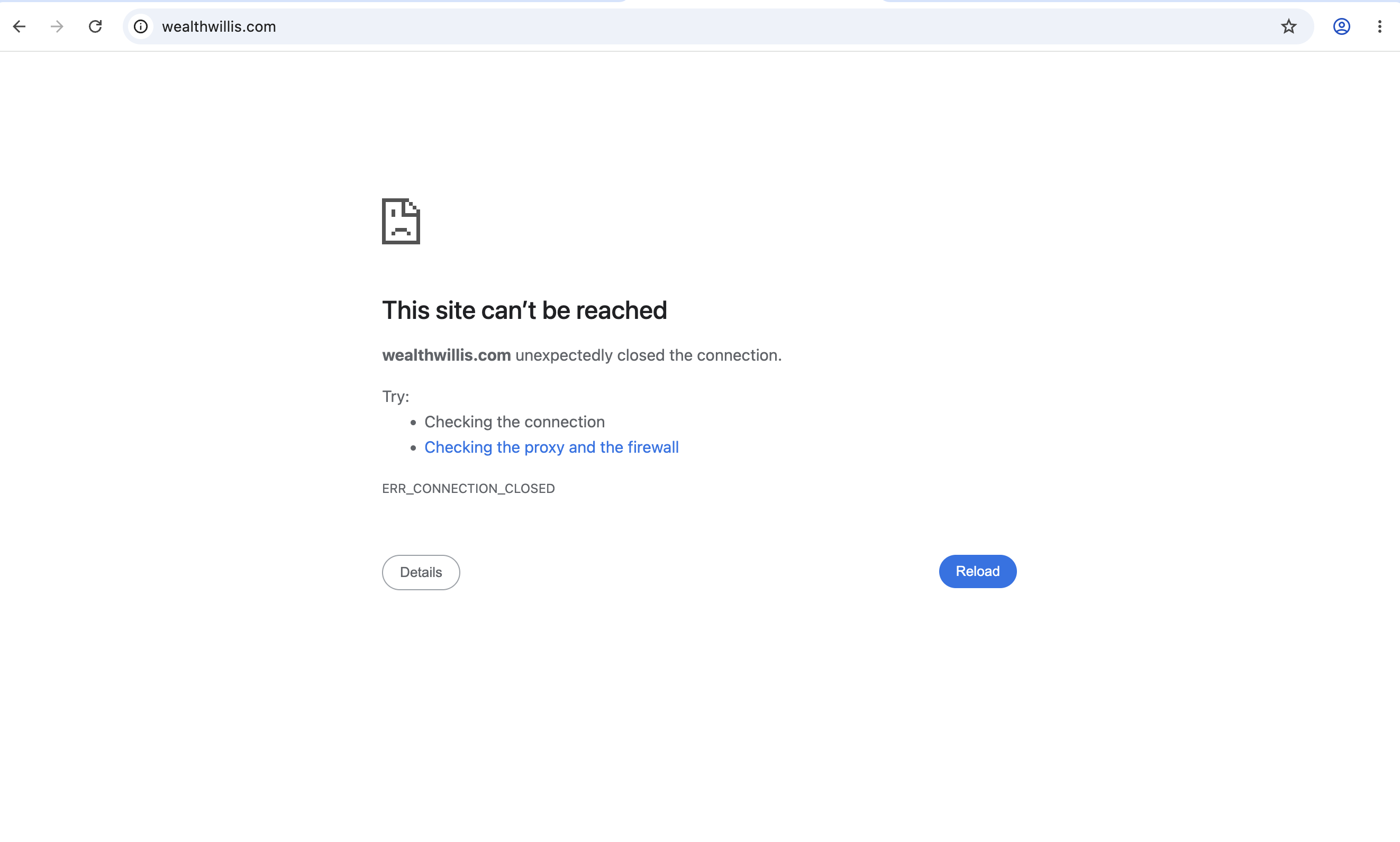
Introduction In the ever-expanding world of online investment opportunities, platforms promising high returns with minimal risk often attract attention—sometimes with disastrous consequences. One such platform that has raised significant concerns is WealthWillis.com , a website that markets itself as a lucrative investment opportunity but exhibits several red flags indicative of a potential scam.
This article provides an objective analysis of WealthWillis.com ,examining its operational structure, key warning signs, and the broader implications for investors. By dissecting its claims, user experiences, and business practices, we aim to equip readers with the knowledge needed to make informed decisions and avoid falling victim to similar schemes.
What Is WealthWillis.com? WealthWillis.com presents itself as an online investment platform specializing in cryptocurrency trading, forex, and stock market investments . The website claims to use advanced algorithms and expert traders to generate substantial returns for its users. Promotional materials often highlight:
Guaranteed high returns (e.g., 10-20% monthly) Low minimum investment (sometimes as little as $250) Automated trading systems that require minimal user effort Testimonials from "successful investors" (often unverifiable)
At first glance, the platform appears professional, with a sleek website design, polished marketing language, and a seemingly transparent dashboard for tracking investments. However, a deeper investigation reveals inconsistencies and potential fraudulent behavior.
How WealthWillis.com Operates: A Closer Look 1. The Sign-Up Process and Initial Investment The onboarding process for WealthWillis.com is designed to be quick and frictionless , which is a common tactic among scam platforms. Users are typically required to:
Register an account with basic personal details (name, email, phone number). Verify their identity (often via a selfie or ID upload, which may later be misused). Deposit funds via cryptocurrency (Bitcoin, Ethereum, USDT) or, in some cases, credit/debit cards.
The platform emphasizes ease of use , with automated withdrawal processes and 24/7 customer support—another hallmark of fraudulent operations designed to appear legitimate.
2. The Investment Mechanism: Too Good to Be True? WealthWillis.com claims to generate profits through algorithmic trading, arbitrage, and market-making strategies . However, several inconsistencies suggest that these claims are misleading:
Lack of Transparency in Trading Strategies The platform does not provide verifiable proof of its trading algorithms or historical performance. Legitimate investment firms typically publish audited reports or third-party verifications, which WealthWillis.com lacks. Unrealistic Return Promises Promising 10-20% monthly returns is statistically improbable in legitimate trading. Even high-risk hedge funds rarely achieve such consistent gains. This alone should raise skepticism. No Regulatory Compliance WealthWillis.com does not disclose any financial licenses or regulatory oversight (e.g., SEC, FCA, CySEC). Legitimate investment platforms are required to register with financial authorities, and their absence is a major red flag.
3. The Withdrawal Process: Where the Scam Unfolds One of the most telling signs of a scam is the withdrawal process . Many users report encountering deliberate obstacles when attempting to cash out their profits, including:
Excessive Verification Requests Users are asked for additional documentation (e.g., utility bills, bank statements) under the guise of "anti-money laundering (AML) compliance." In reality, this is often a tactic to delay or block withdrawals. Minimum Withdrawal Thresholds Some users are told they must reach a certain balance (e.g., $10,000) before withdrawing, which is unusual for legitimate platforms. Sudden "Account Freezes" Users attempting to withdraw funds may receive notifications that their account has been flagged for suspicious activity , requiring further investigation—another common scam tactic to stall payouts. Disappearing Funds In extreme cases, users report that their entire investment vanishes from their dashboard, with no explanation. This suggests that WealthWillis.com may operate as a Ponzi scheme , where early investors are paid with new deposits rather than actual profits.
Key Red Flags and Warning Signs While WealthWillis.com may appear legitimate at first glance, several alarming indicators suggest it is a scam:
1. No Verifiable Company Information
The website provides no physical address , only a generic contact form. There is no registered business entity (e.g., LLC, corporation) tied to the domain. No executive team or leadership details are listed, which is unusual for a financial services company.
2. Overly Aggressive Marketing Tactics
The platform uses high-pressure sales tactics , urging users to "invest now before the opportunity closes." Fake urgency (e.g., "Only 5 spots left!") is a common psychological manipulation technique. Celebrity endorsements or fake testimonials are often fabricated to build credibility.
3. Poor Online Reputation
Scam reporting sites (e.g., ScamAdviser, Trustpilot) have multiple complaints about WealthWillis.com, including:
Users unable to withdraw funds Aggressive sales calls from "account managers" Sudden account bans without explanation
No positive reviews from reputable financial forums (e.g., Reddit’s r/Scams, ForexPeaceArmy).
4. Cryptocurrency-Only Deposits
Legitimate investment platforms typically accept bank transfers, credit cards, and e-wallets (PayPal, Skrill). WealthWillis.com only accepts cryptocurrency deposits , making chargebacks impossible and tracing funds nearly impossible.
5. Lack of Independent Audits
No third-party financial audits or blockchain transaction verifications are available. The platform does not provide real-time trading data or portfolio performance reports , which are standard in legitimate investment firms.
User Experiences: Real-Life Accounts of Deception While individual experiences vary, several common themes emerge from victims of WealthWillis.com:
Case Study 1: The "Guaranteed Profit" Trap A user deposited $2,500 after being promised 15% monthly returns . Initially, small profits were credited to their account, creating a false sense of legitimacy. When they attempted to withdraw $1,000 , they were told:
Their account needed "additional verification." They had to deposit another $5,000 to unlock the withdrawal. After refusing, their account was permanently suspended , and their funds disappeared.
Case Study 2: The Disappearing Act Another investor deposited $5,000 in Bitcoin. For a few weeks, their dashboard showed profits growing to $6,200 . When they tried to withdraw, they received an email stating:
"Due to recent regulatory changes, your withdrawal request has been flagged. Please provide additional documentation within 48 hours." After submitting the requested documents, they received no response , and their account balance dropped to $0 .
Case Study 3: The Fake Support Scam A victim reported being contacted by a "senior account manager" who offered a "VIP investment plan" requiring a $10,000 deposit . After depositing, the manager disappeared , and the user’s funds were never seen again .
These accounts align with typical scam patterns , where victims are lured in with small early "wins" before being blocked from withdrawing their money.
Why Do People Fall for Scams Like WealthWillis.com? Understanding the psychology behind these scams can help prevent future victims. Common tactics include:
1. The "Fear of Missing Out" (FOMO) Principle
Scammers create a sense of urgency , claiming that investment opportunities are limited-time only . Phrases like "Exclusive access for early investors" trigger impulsive decisions.
2. Social Proof Manipulation
Fake testimonials and manipulated screenshots of "successful investors" are used to build trust. Some scams even hire actors to pose as satisfied customers in promotional videos.
3. The Illusion of Control
Platforms like WealthWillis.com give users dashboards to track "profits," making them feel in control. In reality, these numbers are fabricated to keep victims invested.
4. The "Too Good to Be True" Appeal
Humans are naturally drawn to high rewards with low effort , making outrageous return promises highly persuasive. The cognitive dissonance of realizing a scam too late is often too painful, leading victims to deny the truth even when presented with evidence.
How to Protect Yourself from Similar Scams If you encounter a platform like WealthWillis.com, follow these best practices to avoid becoming a victim:
1. Verify Regulatory Compliance
Check if the platform is licensed by financial authorities (e.g., SEC, FCA, ASIC). Search for registration numbers on official regulator websites. Avoid unregulated platforms —legitimate firms prioritize compliance.
2. Research the Company Thoroughly
Search for reviews on independent platforms (Trustpilot, ScamAdviser, Reddit). Look for complaints on financial forums (ForexPeaceArmy, BitcoinTalk). Check the domain age (use Whois.com )—scam sites often have recently registered domains .
3. Be Skeptical of Unrealistic Returns
If it sounds too good to be true, it probably is. Legitimate investments (even high-risk ones) rarely promise consistent 10%+ monthly returns . Compare with market averages —S&P 500 averages ~10% annually , not monthly.
4. Avoid Cryptocurrency-Only Deposits
Reputable platforms accept multiple payment methods (bank transfers, credit cards). Cryptocurrency deposits are irreversible —once sent, funds are gone forever .
5. Test the Withdrawal Process Early
Deposit a small amount first and attempt to withdraw it. If withdrawal is difficult or impossible , it’s a major red flag. Legitimate platforms make withdrawals easy —scams complicate the process .
6. Never Share Sensitive Information
Avoid platforms that ask for excessive personal data (ID scans, utility bills). Scammers may use this information for identity theft or blackmail.
7. Trust Your Gut
If something feels off, it probably is. High-pressure sales tactics, vague answers, and lack of transparency are warning signs.
What Can You Do If You’ve Been Affected? If you've had any interactions with wealthwillis.com, it’s really important to take a breath and act quickly:
Stop sending any more money right away. Make sure to save all your records, like transactions and messages. Take a moment to evaluate your situation before making any more decisions.
Getting your funds back in these cases can be tough and is usually a step-by-step process.
We’re here to offer some guidance to help you understand your options and what you might want to consider next.
👉 Head over to our Contact Us page to learn more and get the support you need.
Conclusion: Is WealthWillis.com a Scam? Based on the operational structure, user reports, and red flags , the evidence strongly suggests that WealthWillis.com is a scam . While it may initially appear as a legitimate investment opportunity, its lack of transparency, unrealistic return promises, and withdrawal obstacles are classic indicators of fraudulent activity.
Investors should exercise extreme caution when encountering platforms like WealthWillis.com. Always conduct thorough research, verify regulatory compliance, and prioritize platforms with a proven track record before committing funds.
Disclaimer: This analysis of WealthWillis.com is based on publicly available information and user reports as of the date of publication. The author and publisher do not endorse, promote, or have any financial or business relationship with WealthWillis.com. The content provided is for informational purposes only and should not be construed as financial, investment, or legal advice. Readers are encouraged to conduct their own research and exercise caution before engaging with any investment platform. The author and publisher disclaim any liability for losses or damages arising from reliance on this information.