
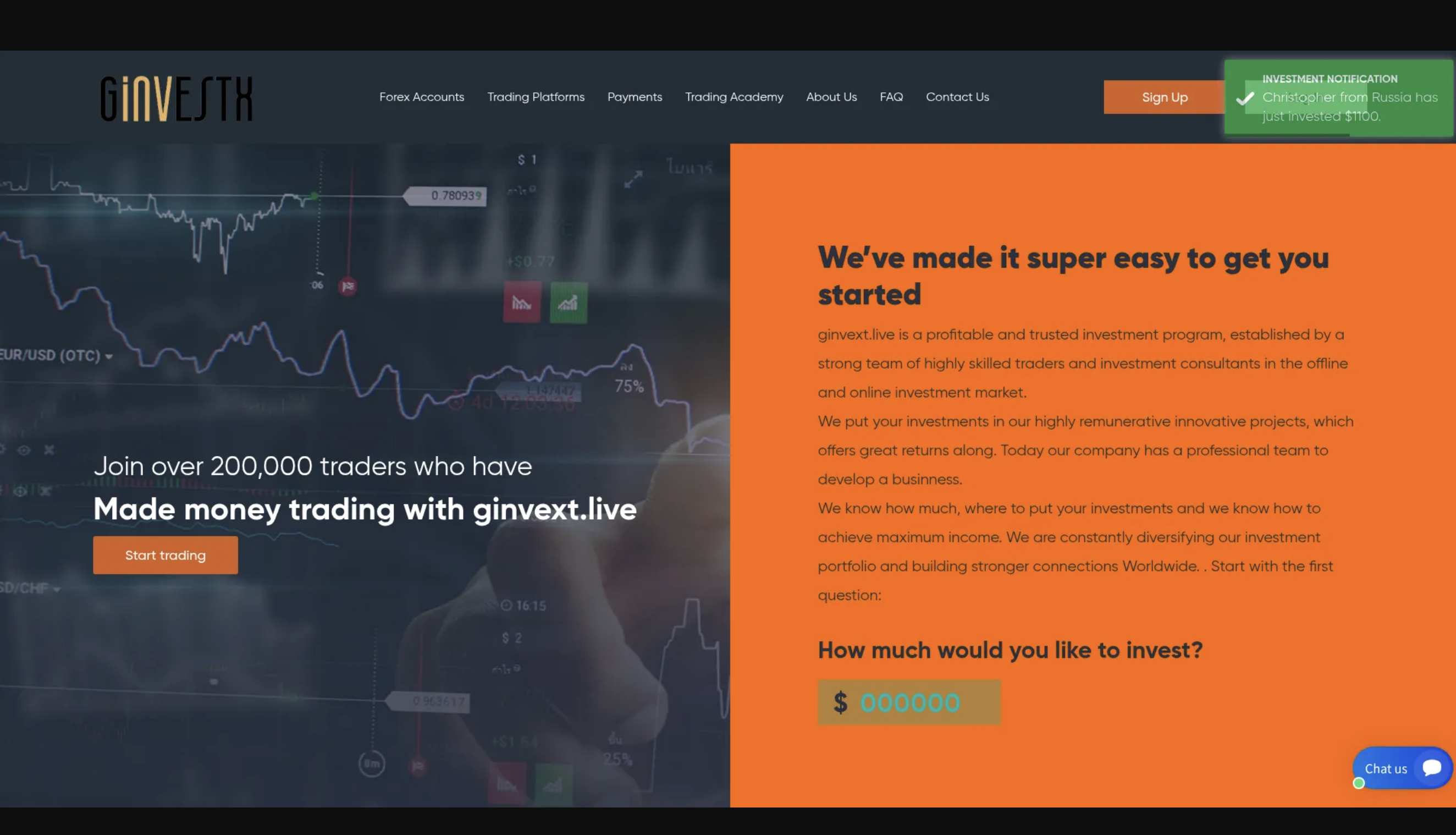

The Bottom Line Up Front
Online investing has exploded in recent years, giving people more ways than ever to grow their money. But here’s the catch: not all platforms play by the rules. Some operate in a legal gray area—or worse, with no oversight at all. Ginvext.com falls into that second category. It markets itself as a sleek, modern trading platform with forex, crypto, stocks, and commodities. But the fact that it’s unregistered with any major financial authority? That’s a huge red flag. If you’re considering using Ginvext.com—or any unregulated platform—you need to understand exactly what you’re getting into. This isn’t just about missing out on perks; it’s about protecting your money. Below, I’ll break down how Ginvext.com works, what it offers, and—most importantly—the risks you’re taking by using it.What Exactly Is Ginvext.com?
At first glance, Ginvext.com looks like any other online trading platform. It lets you trade:- Forex (major, minor, and exotic currency pairs)
- Cryptocurrencies (Bitcoin, Ethereum, and others)
- Stocks & Indices (shares of big companies and market benchmarks)
- Commodities (gold, oil, agricultural products)
- No legal safeguards for your money.
- No guarantee that trades are executed fairly.
- No recourse if something goes wrong.
What Does Ginvext.com Actually Offer?
1. The Trading Experience: What You’ll See
Ginvext.com pitches itself as a one-stop shop for traders, whether you're a beginner or a pro. Here’s what it claims to provide:- Real-time market data (so you can make quick decisions).
- Technical analysis tools (like Moving Averages, RSI, and MACD).
- Automated trading options (for those who want to set it and forget it).
- A web-based platform (with mobile compatibility, though functionality can vary).
2. Leverage: Double-Edged Sword
One of Ginvext.com’s biggest selling points is its high leverage options. For example:- Forex traders can access 1:100 leverage or higher, meaning a $1,000 deposit could control a $100,000 position.
- Crypto traders might see 1:50 leverage or more, depending on market conditions.
3. Deposits & Withdrawals: Where Things Get Shady
Ginvext.com supports multiple funding methods:- Credit/debit cards (Visa, Mastercard)
- Bank transfers (wire, ACH)
- E-wallets (Skrill, Neteller, PayPal)
- Cryptocurrency (Bitcoin, USDT, etc.)
- Unexpected delays (some users report waiting weeks for withdrawals).
- Hidden fees (charges that weren’t disclosed upfront).
- Partial payouts (the platform only releases part of your money).
4. Customer Support: Hit or Miss
Ginvext.com claims to offer 24/7 support via live chat, email, or phone. But in my experience, unregulated platforms often have terrible customer service. You might get:- Slow responses (or no response at all).
- Vague answers when you ask about regulation or fees.
- Pressure to deposit more if you complain.
5. Security: Can You Trust Them?
Ginvext.com claims to use SSL encryption and two-factor authentication (2FA). But here’s the problem: there’s no way to verify this independently. Without regulatory oversight, there’s no guarantee they’re following security best practices. And if they suffer a data breach? Your personal and financial information could be exposed. With no legal protections, you’d have no recourse if your identity is stolen or your funds are drained.How Does Ginvext.com Actually Make Money?
Unregulated platforms like this have a few common revenue streams:1. The Spread (Where They Really Profit)
Every time you place a trade, the platform takes a cut from the spread (the difference between the buy and sell price). The wider the spread, the more they make—even if you lose.2. Commissions & Overnight Fees
- Commissions on each trade (sometimes hidden in fine print).
- Overnight financing fees (if you hold leveraged positions past market close).
- Inactivity fees (if you don’t trade for a while).
3. Affiliate & Referral Programs (The Pyramid Scheme Tactic)
Many unregulated platforms pay users to bring in new traders through referral links. Sounds great, right? Not so fast. This model relies on a constant stream of new deposits—because if people stop joining, the whole system collapses. It’s not sustainable trading; it’s more like a pyramid scheme.The Real Risks of Using Ginvext.com
1. No Legal Protections = Your Money Is at Risk
If a regulated broker goes bankrupt, you’re protected (up to €20,000 in the EU, for example). If Ginvext.com collapses? You’re out of luck.- Funds could be frozen in a dispute.
- No compensation scheme if they steal your money.
- No guarantee of fair trade execution (slippage, requotes, or outright manipulation).
2. Scams Are Rampant
Unregulated platforms are prime targets for fraud. Common scams include:- Fake trading volumes (they inflate activity to lure in new traders).
- Withdrawal blocks (they delay or refuse payouts).
- Phishing attacks (fake login pages to steal your credentials).
- Ponzi schemes (using new deposits to pay old investors).
3. Hidden Fees Eat Into Your Profits
Ever notice how some brokers advertise "zero commissions"? Then you check the fine print and see hidden spreads, withdrawal fees, or inactivity charges. Ginvext.com is no different. They might lure you in with promises of low costs, but once you deposit, the fees start piling up.4. Leverage Will Ruin You (If You’re Not Careful)
Leverage is not your friend—it’s a gambling tool. A 1% market move against you with 1:100 leverage can wipe out your entire account. And if the platform is manipulating prices (which some unregulated brokers do), you could lose money even when the market moves in your favor.5. Your Data Isn’t Safe
Unregulated platforms often cut corners on security. If they suffer a data breach, your:- Personal information (name, address, ID) could be leaked.
- Financial details (bank accounts, credit cards) could be stolen.
- Trading history could be exposed to hackers.
How to Spot a Scam Like Ginvext.com
Before you deposit a single dollar, do your homework. Here’s how:1. Check Their Regulatory Status (Or Lack Thereof)
- Search Ginvext.com on the SEC, FCA, or CySEC websites.
- Look for registration numbers and verify them independently.
- If they can’t provide a license number, walk away.
2. Read Real User Reviews (Not the Fake Ones)
- Check Trustpilot, Forex Peace Army, or Reddit.
- Be skeptical of 5-star reviews—many unregulated platforms fabricate testimonials.
- Look for complaints about withdrawals, hidden fees, or poor support.
3. Test Their Customer Support
- Send them a simple question (e.g., "What’s your regulatory license number?").
- If they avoid the question or give vague answers, run.
4. Start with a Tiny Deposit
- Never dump thousands into an untested platform.
- Withdraw your profits before adding more funds.
- If they delay or block withdrawals, you’ll know something’s wrong.
5. Use Secure Payment Methods
- Avoid platforms that only take crypto or wire transfers (hard to reverse fraud).
- Credit cards or PayPal offer chargeback protections if something goes wrong.
Better Alternatives to Ginvext.com
If Ginvext.com gives you the creeps, here are regulated brokers that actually protect your money:| Broker | Regulation | Why It’s Better |
|---|---|---|
| Interactive Brokers | SEC, FCA | Low fees, global markets, strong security |
| eToro | CySEC, FCA | Social trading, user-friendly, regulated |
| TD Ameritrade | SEC | No hidden fees, excellent research tools |
| XM | CySEC, ASIC | Tight spreads, good leverage options |
What Can You Do If You’ve Been Affected?
If you've had any interactions with Ginvext.com, it’s really important to take a breath and act quickly:- Stop sending any more money right away.
- Make sure to save all your records, like transactions and messages.
- Take a moment to evaluate your situation before making any more decisions.
Final Verdict: Should You Use Ginvext.com?
Ginvext.com looks sleek, offers high leverage, and promises big returns. But here’s the hard truth: ✅ What’s Good:- Access to multiple asset classes (forex, crypto, stocks).
- High leverage (if you’re experienced and can handle the risk).
- User-friendly interface (if it actually works).
- No legal protections—your money is not safe.
- High risk of fraud (withdrawal blocks, fake trading, scams).
- Hidden fees that eat into profits.
- No recourse if they steal your funds.