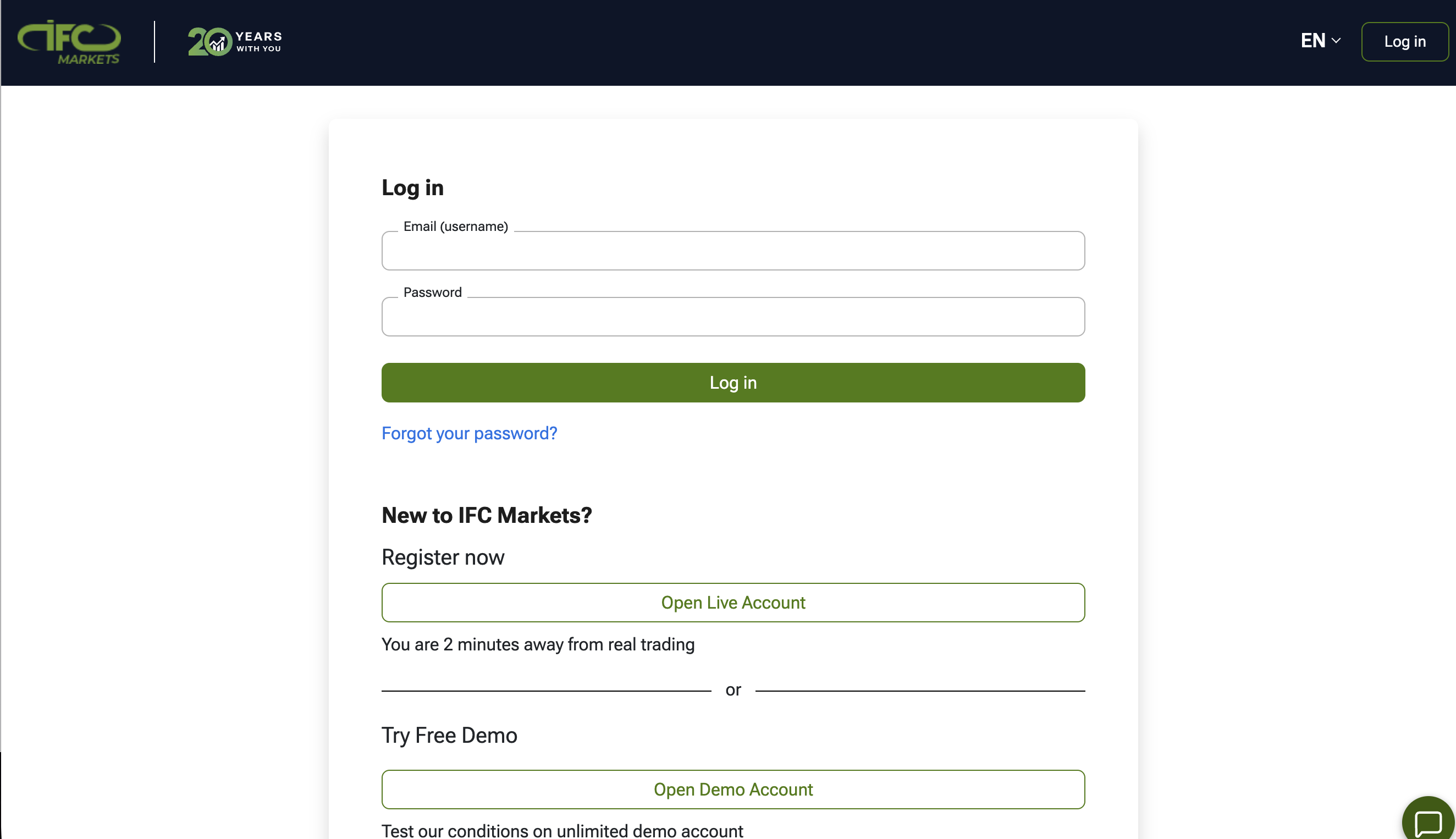
Introduction IFC Markets has been on the radar of retail and institutional traders for years, but it’s not your typical broker. Unlike well-regulated firms, it operates in a regulatory gray area—one that raises serious questions about transparency, legitimacy, and risk. If you're considering trading with them, you need to know exactly what you're getting into.
This isn’t just another brokerage review. I’ve spent years trading in different markets, and I’ve seen firsthand what happens when traders ignore red flags. So, let’s break down IFC Markets—what it offers, how it operates, and why it might (or might not) be the right choice for you.
What Exactly Is IFC Markets? IFC Markets is a financial technology company that provides trading services in forex, CFDs, and cryptocurrencies. Founded in 2006, it positions itself as a bridge between retail traders and institutional markets, offering leverage, advanced tools, and customizable trading conditions.
What Do They Actually Offer?
Forex Trading – Major, minor, and exotic currency pairs. CFDs – Stocks, indices, commodities, and crypto. Cryptocurrency Trading – Bitcoin, Ethereum, and other digital assets. Multi-Platform Access – NetTradeX (their proprietary platform), MetaTrader 4 (MT4), and MetaTrader 5 (MT5). Custom Tools – GeWorko technology, which lets you create synthetic instruments.
At first glance, it looks like a solid platform with plenty of options. But here’s the catch: it’s not regulated by any major financial authority. How IFC Markets Actually Operates The Regulatory Loophole Most reputable brokers are licensed by top-tier regulators like the FCA (UK), CySEC (Cyprus), or ASIC (Australia) . These regulators enforce strict rules on capital requirements, client fund segregation, and audits—all designed to protect traders.
IFC Markets, on the other hand, is registered in the British Virgin Islands (BVI) under IFCM Limited . The BVI Financial Services Commission (FSC) does oversee financial entities, but its oversight is far less rigorous than what you’d find in the EU, UK, or US.
What does this mean for you?
No enforced client fund segregation (your money might not be as safe as you think). No mandatory third-party audits (so you’re trusting IFC Markets’ word on pricing and execution). No strict capital requirements (meaning the company could be more vulnerable to financial trouble).
Trading Conditions: High Leverage, Low Barriers IFC Markets markets itself as a flexible, trader-friendly platform. And in some ways, it is:
Leverage up to 1:400 (great for big gains—or catastrophic losses). Minimum deposit as low as $1 (easy to get started). No commissions on forex (spreads are the main cost). Custom synthetic instruments (GeWorko lets you create your own trading pairs).
But here’s the problem: without strict regulation, there’s no guarantee these conditions are fair. Hidden fees, slippage, or sudden rule changes aren’t unheard of in unregulated spaces.
The Trading Platforms: NetTradeX, MT4, and MT5 IFC Markets gives you three ways to trade:
NetTradeX – Their proprietary platform with advanced charting. MetaTrader 4 (MT4) – The industry standard for forex and CFDs. MetaTrader 5 (MT5) – A more modern upgrade with extra features.
All three support automated trading (Expert Advisors), custom indicators, and multi-device sync. But since IFC Markets isn’t regulated by a top-tier authority, you’re relying on their internal policies for stability and security. The Risks of Trading with IFC Markets 1. Regulatory and Legal Risks: The Biggest Red Flag This is where things get dangerous. Without strong regulation, you’re exposed to:
No client fund segregation – Your money might be mixed with the company’s operational funds, increasing the risk of insolvency. Limited dispute resolution – If something goes wrong, you can’t escalate complaints to a high-tier regulator like the FCA or ASIC. Potential for unfair practices – Price manipulation, hidden fees, or sudden rule changes are more likely in unregulated environments.
2. Financial Risks: Leverage Can Be a Double-Edged Sword
High leverage (1:400) is a gamble – Yes, it can amplify profits, but it can also wipe out your account in minutes. Counterparty risk – Since IFC Markets is your trading counterparty, if they run into financial trouble, your funds could be at risk. Withdrawal issues – Some unregulated brokers have a history of delaying or blocking withdrawals, especially during volatile market conditions.
3. Operational and Security Risks: Can You Trust the Platform?
Platform stability isn’t guaranteed – Without strict regulatory oversight, there’s no assurance that NetTradeX, MT4, or MT5 will remain reliable during high volatility. Data security is a question mark – While IFC Markets claims to use encryption, there’s no independent audit to confirm their security measures. Customer support may be lacking – Unregulated brokers often don’t prioritize client service, leaving you on your own if issues arise.
4. Market and Liquidity Risks: Not All Instruments Are Equal
Some CFDs and crypto markets have low liquidity – This can lead to wider spreads and slippage, hurting your execution. Synthetic instruments (GeWorko) are risky – These custom assets don’t always reflect true market conditions, increasing the chance of unexpected losses.
Who Should Even Consider IFC Markets? IFC Markets isn’t for everyone. Here’s who might find it useful: ✅ Experienced traders who understand the risks of unregulated platforms. ✅ Traders who prioritize high leverage (though this is a double-edged sword). ✅ Investors in niche markets who want to create synthetic instruments.
But if you’re: ❌ A beginner who needs strong protections. ❌ A conservative investor who can’t afford high risk. ❌ Someone who relies on regulatory safeguards…
…then IFC Markets is not the right choice for you.
Better Alternatives: Where Should You Trade Instead? If safety and transparency matter to you, consider these regulated alternatives:
Regulated Forex & CFD Brokers
IG Group (FCA, ASIC, MAS) Saxo Bank (FCA, DFSA, MAS) Interactive Brokers (SEC, FCA, ASIC)
Cryptocurrency Exchanges with Strong Compliance
Binance (Multiple regulatory licenses) Kraken (FCA, FinCEN)
Multi-Asset Platforms with Tier-1 Regulation
OANDA (FCA, ASIC, CFTC) Pepperstone (FCA, ASIC, DFSA)
These platforms offer better transparency, fund protection, and dispute resolution —things you won’t get with IFC Markets.
What Can You Do If You’ve Been Affected? If you've had any interactions with IFC Markets, it’s really important to take a breath and act quickly:
Stop sending any more money right away. Make sure to save all your records, like transactions and messages. Take a moment to evaluate your situation before making any more decisions.
Getting your funds back in these cases can be tough and is usually a step-by-step process.
We’re here to offer some guidance to help you understand your options and what you might want to consider next.
👉 Head over to our Contact Us page to learn more and get the support you need.
Final Verdict: Is IFC Markets Safe? IFC Markets has some appealing features—high leverage, custom tools, and multiple platforms. But its lack of regulation is a dealbreaker for most traders. The Pros: ✔ High leverage (up to 1:400) ✔ Multiple trading platforms (NetTradeX, MT4, MT5) ✔ Low minimum deposit ($1) ✔ Custom synthetic instruments (GeWorko) The Cons: ✖ Unregulated by major financial authorities ✖ Higher risk of unfair pricing and withdrawal issues ✖ Limited legal protections for traders ✖ Potential counterparty risks Who Should Use It? Only experienced traders who fully understand the risks and are comfortable with the lack of oversight.
Who Should Avoid It? Beginners, conservative investors, and anyone who values regulatory protections. The Bottom Line IFC Markets is a feature-rich but high-risk platform . If you’re willing to accept the downsides, it might work for you—but don’t say I didn’t warn you.
For most traders, regulated brokers are the smarter choice . They offer transparency, security, and legal recourse —things that unregulated platforms like IFC Markets simply can’t match.
Final advice? Do your research, know your risk tolerance, and never trade with money you can’t afford to lose.